Solar-Powered Borehole Systems: The Game Changer for Dry Season Farming
Cost breakdowns, installation guides, and return-on-investment analysis for Nigerian farmers considering solar irrigation.
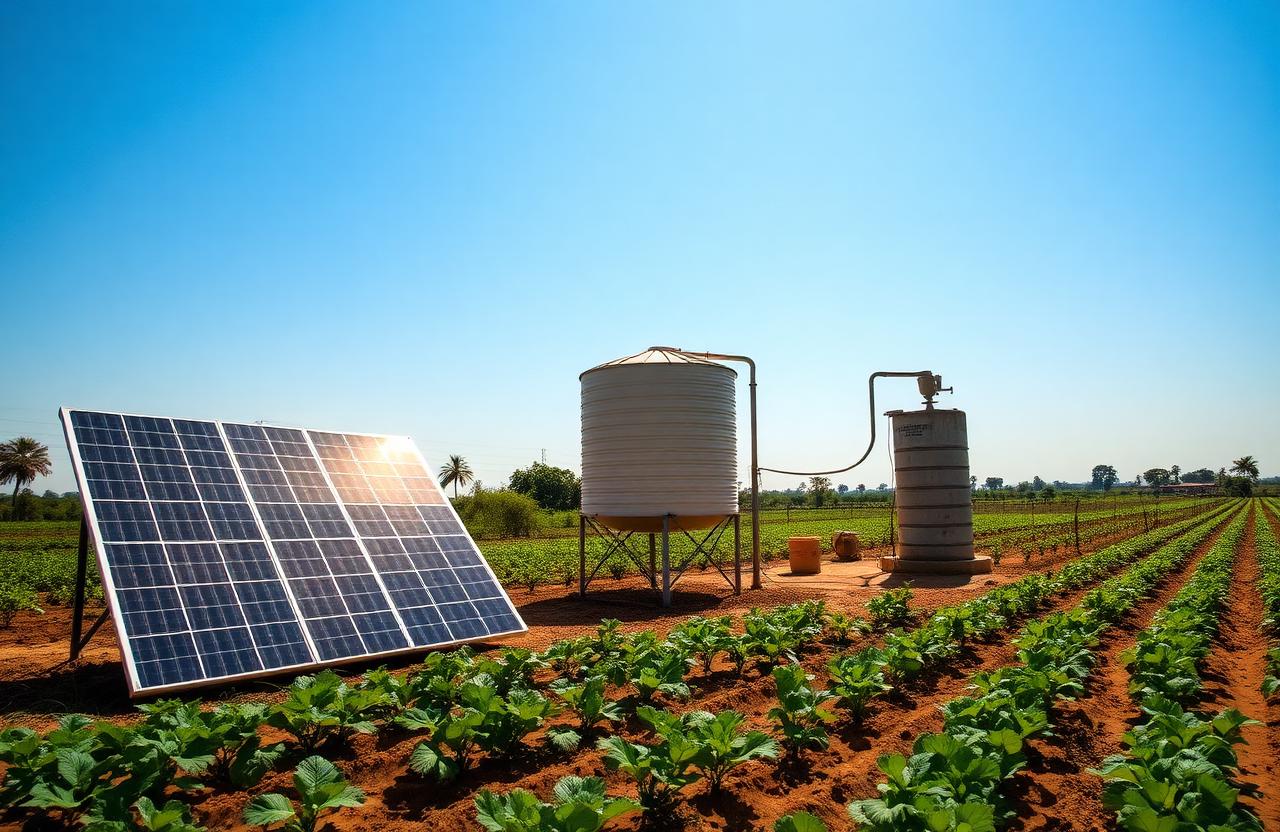
A 1.5kW solar pump can cost between ₦650,000 and ₦1.1M installed, depending on borehole depth and tank size. For a two-hectare vegetable plot, that investment now pays back in roughly 14 months at current dry-season prices.
The cost stack
Borehole drilling is the variable that breaks budgets. Expect ₦4,500–₦7,000 per metre in the Northwest, more in rocky terrain. Plan for 60–80m depth as a baseline.
Sizing the array
A common error is undersizing the panels. Pumps work, but the tank never fills. Rule of thumb: panel wattage = pump wattage × 1.3 to compensate for cloudy mornings and wiring loss.
What breaks
Cables. Always cables. Use UV-rated outdoor sheathing and bury conduit. After cables, in order of frequency: float switches in the storage tank, controller boards exposed to dust, and the rubber gaskets on the pump head.
A worked example: two hectares of tomato in Kebbi
Take a real case from a farmer outside Birnin Kebbi. Borehole at 72 metres. 1.8kW pump. 2,400W of panels. 10,000-litre overhead tank. Drip lines on raised beds.
- Drilling: ₦486,000
- Pump and controller: ₦310,000
- Panels, mounting and cabling: ₦395,000
- Tank, stand and plumbing: ₦220,000
- Drip kit for two hectares: ₦180,000
Total: roughly ₦1.59M. Two dry-season tomato cycles at current farm-gate prices clear the capital, with the drip system itself adding 20–30% to effective yield by eliminating the wet-and-dry stress that cracks fruit.
Diesel vs solar, honestly
A comparable diesel setup is cheaper to install — perhaps ₦700,000 all in — but burns ₦18,000–₦25,000 of fuel per week during peak irrigation. Within 18 months, the solar farmer is ahead. Within three years, it is not close.
Maintenance schedule
- Weekly: wipe panels, check tank level, listen to the pump.
- Monthly: tighten cable lugs, inspect controller for ant nests.
- Quarterly: pull the pump if pressure drops more than 10%.
- Annually: replace gaskets, service the controller, audit the borehole for sand intrusion.
What to ask the installer before you sign
- What is the warranty on the pump, and is it honoured in-country?
- Is the controller MPPT or PWM? (Insist on MPPT.)
- Who owns the borehole logs?
- What is the procedure if water table drops next dry season?
Get the answers in writing. The farmers who regret the investment are almost always the ones who took the cheapest quote without these four questions answered.
Bright covers water infrastructure and renewable energy in agriculture.
More from FarmPulse
All →
How Precision Agriculture Is Transforming Smallholder Farms in Northern Nigeria
5 Things Every Nigerian Poultry Farmer Must Know Before Expanding in 2026

Regenerative Farming Practices Gaining Ground Across the Middle Belt